
Amedeo Modigliani
Summary
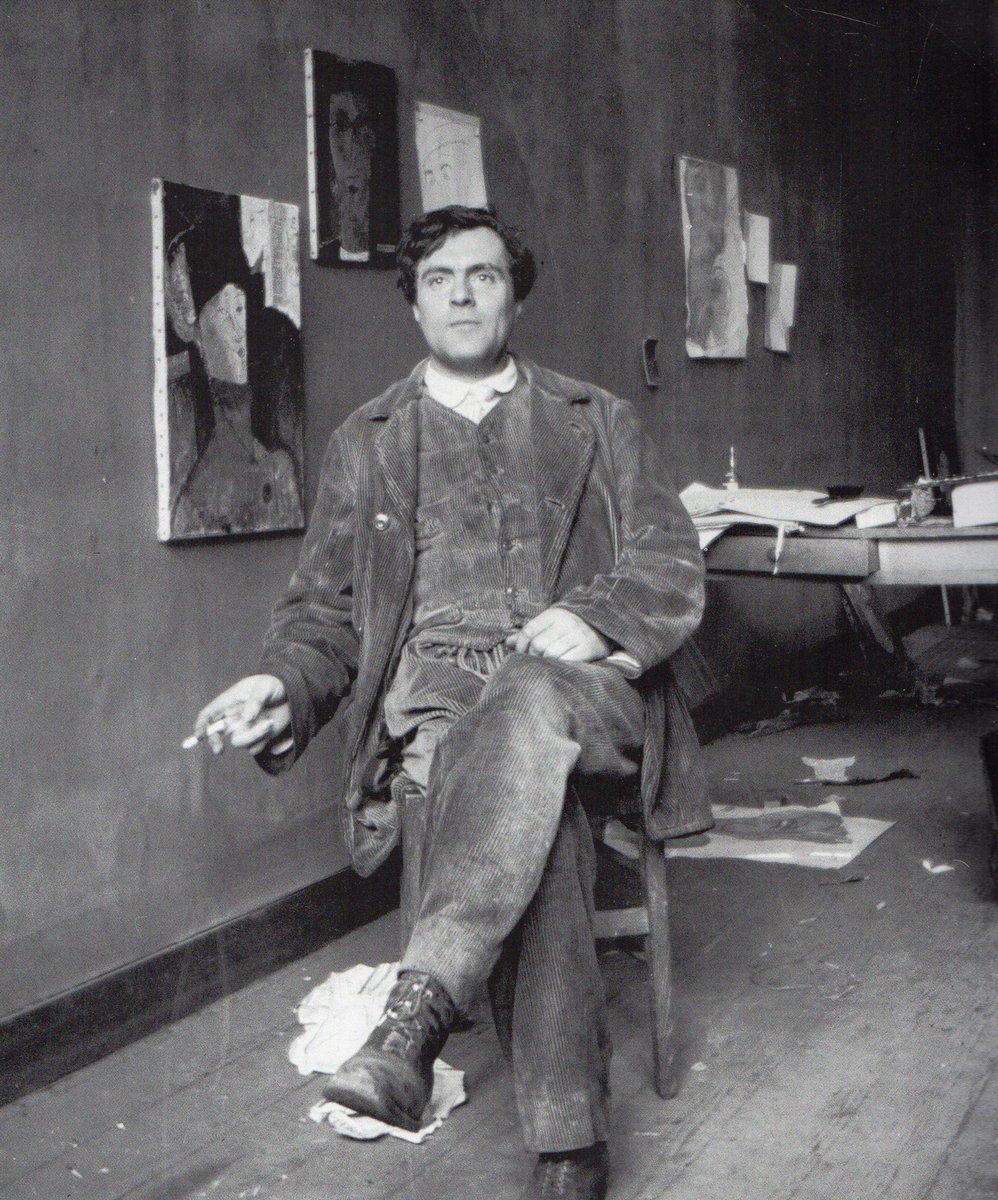
Amedeo Modigliani (1884-1920) was an Italian-born artist who developed a unique and instantly recognizable style in the vibrant art scene of early 20th-century Paris. Fusing influences from African sculpture, Cubism, and his classical Italian heritage, he is celebrated for his portraits and nudes characterized by elongated necks, mask-like faces, and a profound sense of melancholy elegance. Despite living in poverty and battling chronic illness, including tuberculosis, which was exacerbated by a lifestyle of excess, Modigliani produced a remarkable body of work. He struggled for recognition throughout his life, having only one solo exhibition. He died in destitution at the age of 35, followed by the tragic suicide of his pregnant partner, Jeanne Hébuterne. Though a commercial failure in his lifetime, Modigliani’s reputation grew posthumously, and he is now regarded as a pivotal figure of the École de Paris, with his life story becoming a romantic legend of the quintessential bohemian artist.
Childhood and Early Training
Amedeo “Dedo” Modigliani was the fourth child of a Jewish family in Livorno, Italy, born just as his family’s business declared bankruptcy. A family legend holds that his birth saved valuable heirlooms from being repossessed, as custom forbade seizing possessions from the bed of a woman in labor. Raised with a deep appreciation for literature and philosophy by his educated relatives, Modigliani decided he wanted to be a painter after a bout of typhoid fever. Though his mother initially hoped for a more academic path, she supported his passion, and by 1899 he had left regular schooling to study art full-time. After a diagnosis of tuberculosis in 1901, his artistic enthusiasm was further fueled by visits to museums across Italy. He later studied figure drawing in Florence and briefly attempted sculpture, though he lacked the physical strength for it. Drawn by tales of the Parisian avant-garde, and increasingly dissatisfied with the traditional art scene in Italy, he finally moved to Paris in 1906.
Mature Period in Paris
Upon arriving in Paris, Modigliani immersed himself in the city’s museums and galleries and quickly fell in with the Bateau Lavoir circle, which included luminaries like Pablo Picasso and Max Jacob. He focused on developing a unique painting style that could stand alongside the innovative work of his contemporaries, initially showing influences from Post-Impressionism and Art Nouveau. However, he failed to gain any serious attention or sales, leading to frustration and an increased reliance on alcohol and drugs, which worsened his already poor health. A significant turning point came in 1907 when he met Dr. Paul Alexandre, who became his friend and first important patron. Inspired by the simplified forms of sculptor Constantin Brancusi, whom he met in 1909, Modigliani dedicated several years to sculpture, creating stone heads influenced by “primitive” African and Southeast Asian art, a style also embraced by Picasso.
Late Years and Signature Style
In 1914, the art dealer Paul Guillaume began to promote Modigliani’s work, but the artist remained impoverished. During this time, he had a tumultuous relationship with the writer Beatrice Hastings, who was the subject of many of his portraits. After their separation, he became seriously ill from his indulgent lifestyle. Having regained his strength but no longer able to handle the physical demands of sculpture, he returned to painting portraits. It was then that he fully developed his signature style, blending elegant, elongated lines with expressive, stylized figures that offered glimpses into his subjects’ personalities. In 1917, he met Jeanne Hébuterne, a young art student who became his common-law wife and a stabilizing force in his life. His dealer, Leopold Zborowski, arranged his first and only solo exhibition that same year, which caused a scandal when police temporarily shut it down over a nude painting in the window. Despite his declining health, Modigliani became highly productive, spurred by the birth of his daughter in 1918. He died from tubercular meningitis in 1920.
The Legacy of Amedeo Modigliani
While he achieved little commercial success during his lifetime, Modigliani’s work became immensely popular after his death, and he is now considered one of the great artists of the modern era. Although not formally part of any movement, his work masterfully fused elements of Cubism and non-Western art with his own probing insight into the human psyche. His legacy, however, remains inseparable from the romantic myth of the tragic bohemian artist. This legend was cemented by the suicide of Jeanne Hébuterne the day after his death and has been the central theme of numerous biographies and films that explore his passionate and self-destructive life.
Showing the single result
-
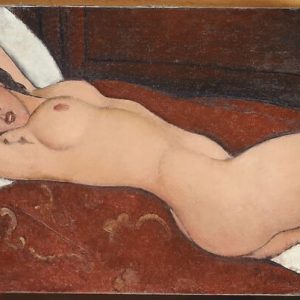
Reclining Nude
$276.00 – $584.00Price range: $276.00 through $584.00 Select options This product has multiple variants. The options may be chosen on the product page