
Museum of Applied Arts; Vienna
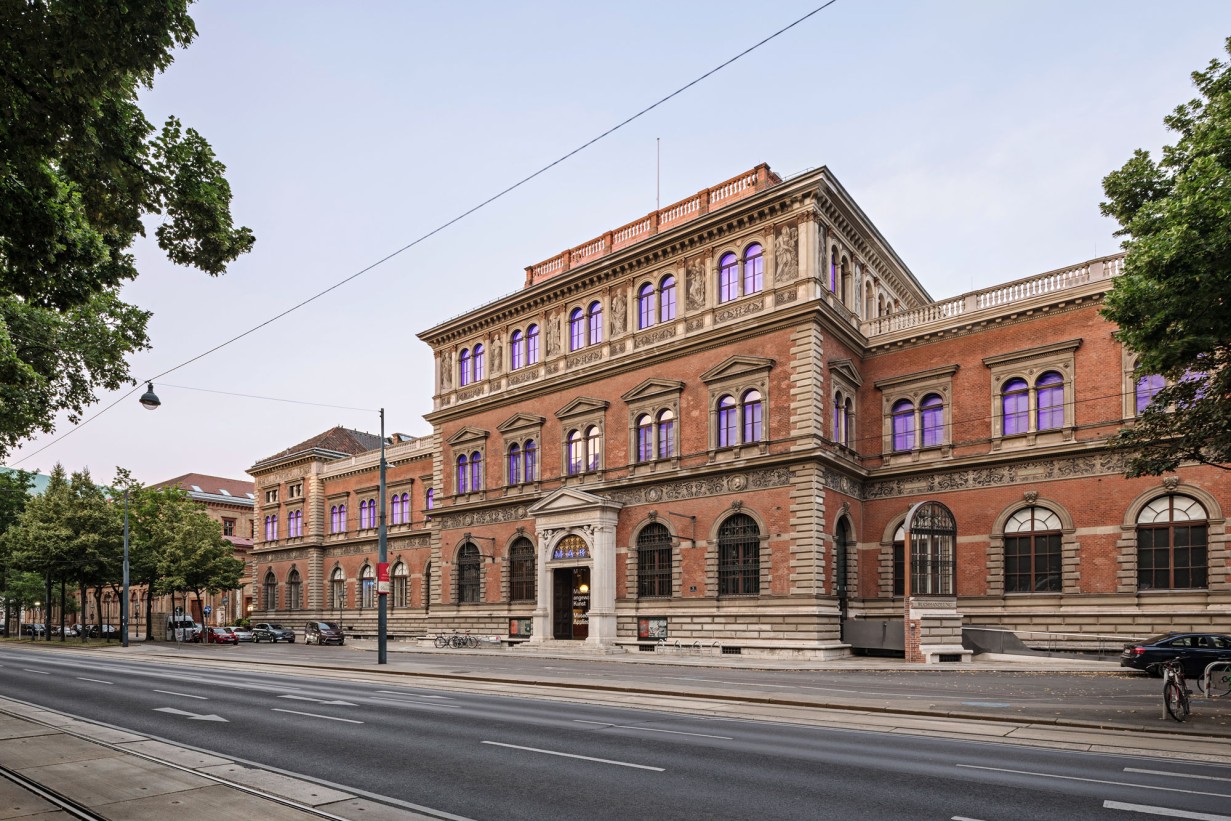
The MAK – Museum of Applied Arts in Vienna is one of the oldest and most significant museums of its kind in the world. Founded in 1863, its mission was to create a fruitful combination of the past and the future, serving as both an exemplary collection for artists and industrialists and as an educational institution. Today, it continues this legacy, creating a dynamic dialogue between applied arts, design, architecture, and contemporary art.
A 19th-Century Vision on the Ringstraße
Established in 1863 by Emperor Franz Joseph, the Imperial Royal Museum of Art and Industry was modeled after London’s South Kensington Museum (now the V&A). Under its first director, Rudolf von Eitelberger, its purpose was to elevate the taste and quality of Austrian arts and crafts. In 1871, the museum moved into its permanent home, a grand Renaissance-style building designed by Heinrich von Ferstel, which was the first museum to be built on Vienna’s famous Ringstraße. In parallel, the Vienna School of Arts and Crafts (Wiener Kunstgewerbeschule) was founded in close association with the museum, uniting theoretical training and practical application under one forward-thinking vision.
A Crucible of Viennese Modernism
At the turn of the 20th century, the MAK became a vital center for the development of Viennese Modernism. Under the influential directorship of Arthur von Scala, who took over in 1897, the museum embraced the progressive styles of the era. Scala succeeded in bringing key figures like architects Otto Wagner and Josef Hoffmann and artist Koloman Moser to work at the museum and its affiliated school. This cemented the MAK’s legacy as a home for the Vienna Secession movement and, most importantly, the Wiener Werkstätte, the groundbreaking design collective whose complete archive the museum would later acquire in 1955.
Transformation and Expansion
Throughout the 20th century, the MAK underwent significant transformations. The collection grew with the acquisition of major holdings, including imperial oriental carpets and the entire Wiener Werkstätte archive. A particularly transformative era began with the appointment of director Peter Noever in 1986. He initiated the museum’s contemporary art collection, oversaw a complete renovation and underground expansion of the historic building, and established the MAK Center for Art and Architecture in Los Angeles. During this period, the permanent collection was radically redesigned with interventions by major contemporary artists like Donald Judd and Jenny Holzer, physically enacting the museum’s mission to create a dialogue between past and present.
The MAK Today: Design for Change
Today, the MAK operates under the guiding theme of “Change through applied art.” This vision is manifested in innovative projects like the MAK DESIGN LAB, which re-contextualizes the historical collection to address contemporary issues, and the interdisciplinary VIENNA BIENNALE FOR CHANGE, which combines art, design, and architecture. The museum uses its rich collection and history as a starting point to engage in a lively dialogue about social and ecological challenges, proving itself to be a forward-thinking institution focused on a sustainable future.
Showing the single result
-

The Tree of Life
$316.00 – $1,084.00Price range: $316.00 through $1,084.00 Select options This product has multiple variants. The options may be chosen on the product page