
Tate Britain; London
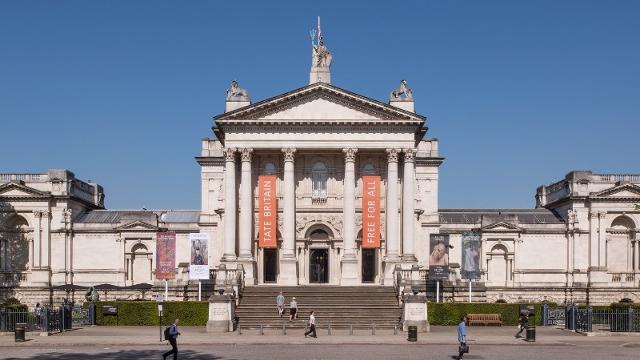
When Tate first opened in 1897, it was a single institution displaying a small collection of British art. Today, it has grown into a family of four major sites that house the national collection of British art from 1500 to the present day, as well as international modern and contemporary art, encompassing nearly 70,000 artworks. This evolution began with the vision of industrialist Henry Tate, who in 1889 offered his collection to the nation, laying the groundwork for one of the world’s leading art institutions.
The Founding of the Gallery
In 1889, Henry Tate, an industrialist who made his fortune as a sugar refiner and was a great patron of Pre-Raphaelite artists, offered his collection of 65 nineteenth-century British paintings to the nation. The bequest, which included masterpieces like John Everett Millais’s Ophelia and J.W. Waterhouse’s The Lady of Shalott, was initially turned down by the trustees of the National Gallery due to a lack of space. This spurred a campaign to create a new gallery dedicated to British art. With a foundational donation of £80,000 from Tate himself, the gallery at Millbank, now known as Tate Britain, was constructed and opened its doors in 1897, with Tate’s original bequest forming the core of its founding collection.
Early Growth and Support
Tate’s initial growth was significantly bolstered by key philanthropists. The arts and antiques dealers Sir Joseph Joel Duveen and his son, Lord Joseph Duveen, made major financial contributions that funded large extensions, including new rooms for the Turner Bequest in 1910 and the Duveen Sculpture Galleries, the first galleries in England built specifically for sculpture. In 1957, the support base was broadened with the creation of Tate Members (originally the Friends of the Tate Gallery), an organization founded to raise money for acquisitions. Their fundraising efforts have since made possible the purchase of nearly 400 masterpieces, including notable works such as Henry Moore’s King and Queen, Henri Matisse’s The Snail, and Pablo Picasso’s Weeping Woman.
Mission and Vision for the 21st Century
Tate operates on the principle that access to art is a universal human right and champions its galleries as sites of creative learning. Its mission is to celebrate the art of the past and present in its full complexity and diversity, supporting artistic risk-taking and deep scholarship. Committed to maintaining free entry to its collections, Tate aims to welcome audiences that reflect the nation’s diversity and attract a broad international public. The institution seeks to redefine the museum experience for the 21st century by influencing critical thinking about art and offering visitors multiple points of engagement with its collection.
The National Collection
Tate holds the national collection of British art, spanning over 500 years, alongside a collection of modern and contemporary international art from across all continents. The definition of “British art” is based on an artist’s contribution to its history and development, rather than their nationality alone. The collection embraces all media, from painting, sculpture, and prints to photography, film, installations, and performance. In its acquisitions, Tate is committed to expanding the geographical scope of its collection and maintains flexibility rather than a fixed budget for historic or contemporary works, allowing it to react to the market and acquire artists who have already achieved significant national or international recognition.
Historical Reflection
As a modern institution, Tate acknowledges the complexities of its history. There has been much debate regarding the association of its founder, Henry Tate, with slavery. The museum is actively engaging with this important question and has worked with historical researchers at the Centre for the Study of the Legacies of British Slave-ownership at University College London to analyze the historical facts and share them publicly.
Showing all 2 results
-

The Lady of Shalott
$476.00 – $2,448.00Price range: $476.00 through $2,448.00 Select options This product has multiple variants. The options may be chosen on the product page -

The Magic Circle
$396.00 – $1,860.00Price range: $396.00 through $1,860.00 Select options This product has multiple variants. The options may be chosen on the product page