
Head of a Woman (La Scapigliata)

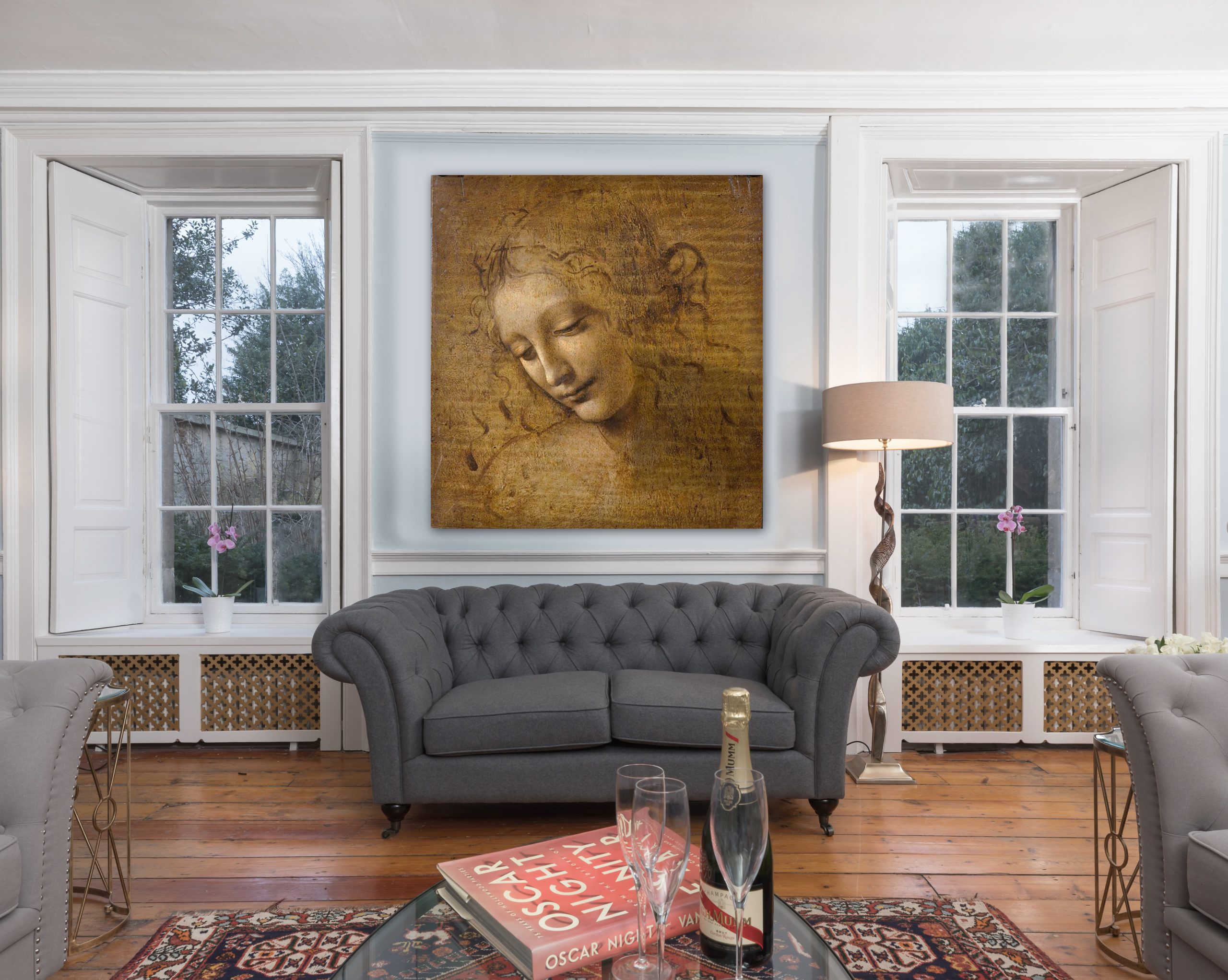
Leonardo da Vinci’s Head of a Woman (La Scapigliata) (1500–1505), housed in the Galleria Nazionale di Parma, is an unfinished oil on poplar panel measuring 24.6 × 21 cm. The serene face, rendered with refined sfumato, contrasts with the loosely sketched hair and neck. This deliberate interplay recalls Pliny the Elder’s account of Apelles’s unfinished Venus of Cos, admired for its incompletion. The sitter’s downcast gaze and delicate features evoke Leonardo’s ideal of beauty, making the work a study in contrasts—between finish and suggestion, form and idea—that captures the artist’s fascination with the creative process and the nature of beauty.
Ratings / Reviews
Información adicional
| Dimensions | Original: 24.6 cm x 21 cm, Small: 19.7 cm x 16.8 cm, Medium: 29.5 cm x 25.2 cm, Large: 34.4 cm x 29.4 cm |
|---|
$276.00 – $477.00Price range: $276.00 through $477.00
Leonardo da Vinci’s Head of a Woman (La Scapigliata), created between 1500 and 1505, is a small yet captivating work measuring 24.6 × 21 cm. Executed in oil, earth, and white lead pigments on poplar, the painting is now housed in the Galleria Nazionale di Parma. This unfinished portrayal of a young woman with loose, disheveled hair—hence the nickname La Scapigliata—is one of Leonardo’s most enigmatic and admired works.
The composition presents a striking contrast between the refined modeling of the woman’s face and the sketch-like treatment of her hair, neck, and shoulders. This intentional interplay between finish and incompletion is characteristic of Leonardo’s experimental approach. The soft sfumato modeling of her features imbues the face with a serene grace, while the loosely rendered hair creates a sense of spontaneity and vitality.
This juxtaposition is thought to have been inspired by a passage from Pliny the Elder, widely known during the Renaissance. Pliny recounted that the ancient Greek painter Apelles left a depiction of the Venus of Cos unfinished, yet the incomplete work was admired even more than his earlier, fully realized painting of the goddess. Leonardo, always intrigued by the creative process, may have drawn upon this idea, allowing the viewer to contemplate beauty in both its formed and unformed states.
The expression of the figure is equally captivating. Her downcast eyes, slight smile, and delicately modeled lips create an air of introspection, imbuing the portrait with a quiet emotional resonance. While there is no definitive identification of the sitter, the work aligns with Leonardo’s broader interest in idealized female beauty, as seen in other paintings and drawings from this period.
La Scapigliata exemplifies Leonardo’s mastery in conveying softness, depth, and psychological presence with the subtlest means. The painting remains an exceptional study in contrasts: between the finished and unfinished, the precise and the suggestive, the idealized and the natural.