
Botticelli
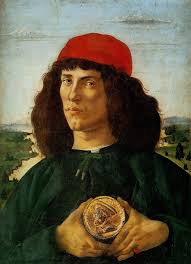
Summary
Sandro Botticelli is celebrated as one of the most important humanist painters of the Early Renaissance, a master whose work captured the intellectual and artistic vitality of Florence during its cultural zenith under Medici patronage. At a time when the city flourished as a center of classical philosophy, literature, and the arts, Botticelli created paintings that translated humanist ideals into visual form. His career encompassed religious altarpieces, portraits, and mythological narratives, each reflecting his pursuit of harmony, moral virtue, and ideal beauty.
In his most famous works, Primavera and The Birth of Venus, Botticelli wove classical mythology into the language of Renaissance humanism, producing allegories of love, virtue, and beauty that remain icons of the era. Though his reputation declined after his death, Botticelli’s vision, rooted in the poetic traditions of Florence, continues to inspire centuries later.
Childhood and Early Training
Born Alessandro di Mariano Filipepi in Florence around 1445, Botticelli spent his life in the working-class district near Borgo Ognissanti. His nickname, “Botticelli” (“little barrel”), came from an older brother and stayed with him throughout his career.
He likely began his artistic training in the late 1450s in the workshop of Fra Filippo Lippi, whose graceful line and tender Madonnas shaped Botticelli’s style. There may also have been time in Andrea del Verrocchio’s studio, where he encountered sculptural form and perspective.
By 1470, Botticelli had established his workshop. Early works like Fortitude (c. 1470) and Madonna of the Eucharist (c. 1472) show clarity of line, elegance, and sculptural modeling that became hallmarks of his mature work. His connections to elite families such as the Vespucci placed him in the orbit of Medici patronage.
Mature Period
By 1472, Botticelli had joined the Compagnia di San Luca, Florence’s painters guild. His Adoration of the Magi (c. 1476) for Santa Maria Novella depicted members of the Medici family and likely included his self-portrait, securing his position among Florence’s leading painters.
The 1480s marked Botticelli’s peak. Under the patronage of Lorenzo de Medici and the influence of the Medici’s Neoplatonic circle, he produced Primavera (c. 1477-1482) and The Birth of Venus (c. 1486), mythological masterpieces that merged classical form, Renaissance ideals, and allegorical depth. In 1481, Pope Sixtus IV summoned him to Rome to paint frescoes in the Sistine Chapel,
including The Punishment of the Rebels and The Temptation of Christ, placing him alongside the foremost artists of his age.
Late Period
Florence’s political climate shifted in the 1490s with the fall of the Medici and the rise of Dominican friar Girolamo Savonarola. Savonarola’s moral reform and the Bonfire of the Vanities in 1497 may have influenced Botticelli, whose later works, such as Mystic Nativity (1501) and Mystic Crucifixion (1501), reflect a more spiritual, introspective tone.
Botticelli remained in Florence, continuing to work but receiving fewer commissions as new styles emerged, led by Leonardo da Vinci and Michelangelo. He died in Florence on May 17, 1510, and was buried in the Vespucci family chapel at Ognissanti.
Style and Technique
Botticelli’s style is defined by elegant linearity, rhythmic composition, and poetic symbolism. Working primarily in tempera on panel, he created luminous surfaces with subtle gradations of color. His figures are characterized by elongated proportions and flowing contours, lending them an ethereal grace.
In religious works, Botticelli balanced devotional clarity with decorative richness, often using gold accents and intricate details in fabrics and settings. His mythological paintings reveal his engagement with Neoplatonic ideals, transforming classical narratives into moral allegories. Unlike the strict naturalism of contemporaries such as Leonardo, Botticelli prioritized idealized beauty and expressive design over strict perspective or anatomy, creating compositions that function as both visual poetry and philosophical statement.
Legacy
Botticelli’s influence was considerable during his lifetime, shaping the work of artists such as Filippino Lippi. However, his reputation declined in the 16th century as the High Renaissance favored the monumental realism of Leonardo and Michelangelo.
Rediscovered in the 19th century by the Pre-Raphaelites, who admired his lyrical style, Botticelli was restored to prominence. Works like Primavera and The Birth of Venus became celebrated symbols of Renaissance art. In the modern era, his imagery has inspired artists from Dante Gabriel Rossetti to Andy Warhol, and his vision of Venus remains embedded in popular culture.
Today, Botticelli stands as a central figure of Early Renaissance painting- his art a lasting testament to the beauty, intellect, and ideals of Florence at its cultural height.
Mostrando el único resultado
-

The Birth of Venus
$676.00 – $3,840.00Price range: $676.00 through $3,840.00 Seleccionar opciones Este producto tiene múltiples variantes. Las opciones se pueden elegir en la página de producto