
Cézanne
Summary
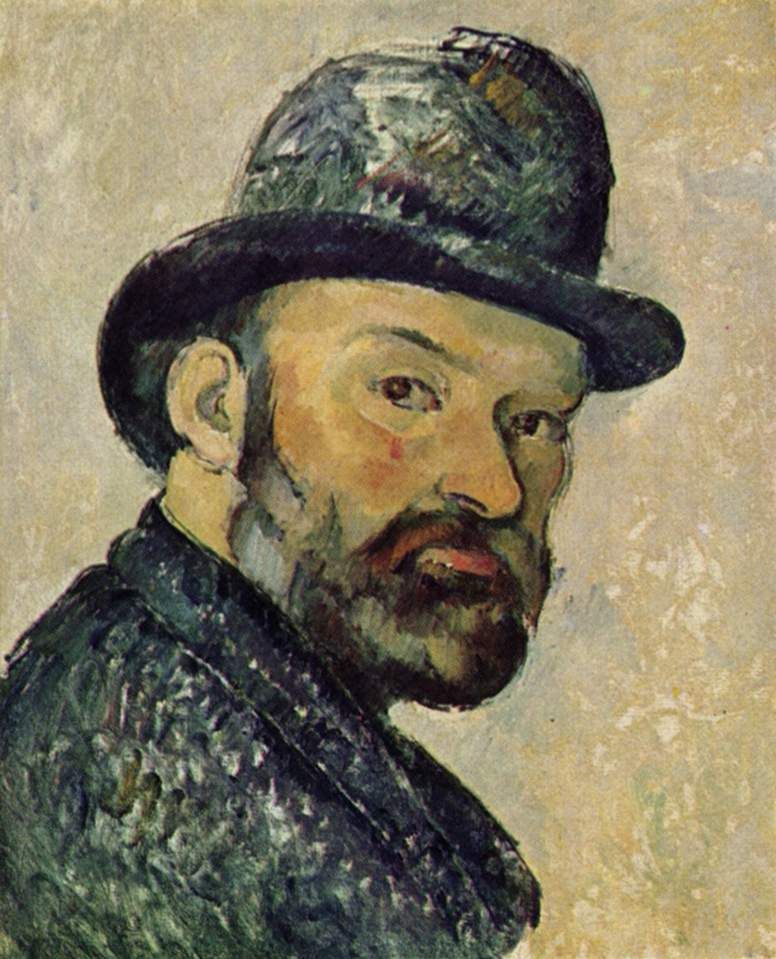
Paul Cézanne is widely regarded as one of the most influential artists, bridging the gap between 19th-century Impressionism and 20th-century modernism. Known as the “Master of Aix,” after his hometown Aix-en-Provence, Cézanne’s work laid the foundation for movements like Cubism and Abstract Expressionism. Throughout his life, he championed a vision of painting that emphasized the material qualities of paint and the structural foundations of form, departing from the Impressionists’ focus on fleeting effects of light and atmosphere. His artistic legacy profoundly reshaped the understanding of form, color, and perspective in modern art.
Childhood and Early Life
Paul Cézanne was born in 1839 in Aix-en-Provence, a provincial town in southern France. His father, Louis-Auguste Cézanne, was a prosperous lawyer and banker who envisioned a conventional and secure career for his son. However, Paul’s artistic ambitions clashed with his father’s expectations, leading to a complicated and often strained relationship. Despite this, his father financially supported him for many years, allowing Cézanne a degree of freedom to pursue art without immediate economic pressure.
From a young age, Cézanne showed a strong affinity for drawing and painting. His early education included enrollment in evening drawing classes in Aix, where he began developing his foundational skills. He was also deeply influenced by the landscape and environment of Provence, with its rugged hills, vibrant light, and ancient architecture, all of which would later become recurring motifs in his art.
A formative friendship in Cézanne’s youth was with Émile Zola, a fellow Aix native who would become one of France’s most celebrated writers. The two were inseparable for a time, sharing interests in literature, philosophy, and art. However, their relationship later cooled, partly due to differing views on art and life.
Early Training and Paris Years
In 1861, Cézanne moved to Paris, the artistic heart of France, with ambitions to become a professional painter. He applied twice to the prestigious École des Beaux-Arts but was rejected both times. Instead, he attended the less formal Académie Suisse, where young artists practiced drawing from live models and copied masterworks. During this time, Cézanne met several future Impressionists, including Camille Pissarro, Claude Monet, and Auguste Renoir. Though Cézanne would ultimately forge a distinctive style, these interactions were critical in shaping his early artistic development.
Cézanne’s early paintings were characterized by dark tones and heavy brushwork, a style that contrasted with the lighter palettes favored by the Impressionists. His work was frequently rejected by the conservative Paris Salon, a source of frustration for the artist. Nevertheless, Cézanne remained committed to his vision and gradually refined his approach.
The year 1870 marked a pivotal moment for Cézanne. Avoiding military conscription during the Franco-Prussian War, he relocated to L’Estaque, a small fishing village near Marseille. There, influenced by the Mediterranean sunlight and landscape, and encouraged by Camille Pissarro, he began experimenting with brighter colors and looser brushstrokes. This period signaled Cézanne’s gradual departure from academic conventions and his embrace of a more personal and innovative style.
Mature Period and Artistic Philosophy
By the 1880s, Cézanne had established himself as a pioneering figure whose work defied easy classification. Unlike Impressionists who sought to capture the momentary effects of light and atmosphere, Cézanne aimed to reveal the enduring structure beneath the surface of appearances. He famously stated that he wanted to “treat nature by the cylinder, the sphere, the cone,” emphasizing the geometric simplification of natural forms.
Cézanne developed a systematic approach to painting that prioritized the relationships between color, shape, and spatial depth. His brushstrokes were deliberate and methodical, layering patches of color to build volume and solidity. This technique gave his compositions a sculptural quality, as if the forms were emerging from the canvas.
During this period, Cézanne created numerous still lifes, landscapes, and portraits that challenged traditional perspective. His still lifes, often featuring simple objects like apples, bottles, and ceramics, were radical in their flattening of space and shifting viewpoints. These works questioned conventional visual coherence, inviting viewers to engage actively with the painting’s surface.
Portraiture also occupied an important place in Cézanne’s oeuvre. He painted many portraits of his companion, Hortense Fiquet, and their son, Paul. These works are marked by their psychological depth and formal experimentation, focusing on the interplay of light and shadow and the structural shapes of the human face.
Later Years and Artistic Focus
The final two decades of Cézanne’s life saw a narrowing of his artistic focus. He increasingly returned to motifs rooted in his native Provence, most notably Mont Sainte-Victoire, a mountain that dominated the landscape near Aix-en-Provence. Cézanne painted this mountain repeatedly, exploring how its form changed under varying light conditions and atmospheric effects. His depictions of Mont Sainte-Victoire are celebrated for their synthesis of color, form, and spatial complexity.
Cézanne also worked extensively on a series of Bathers, depicting groups of nude figures in natural settings. These paintings are considered some of his most ambitious and experimental, merging human forms with the landscape in an abstracted manner. The Bathers anticipated the fragmentation and reassembly of form that would become central to Cubism.
Despite his growing reputation in artistic circles, Cézanne was known for his reclusive nature and difficulties in social relationships. His later years were affected by health issues, including diabetes, and episodes of depression. He remained fiercely independent, often working in isolation and disregarding the prevailing artistic trends.
Paul Cézanne died on October 22, 1906, at his family home in Aix-en-Provence after contracting pneumonia. His death marked the passing of a monumental figure whose work had quietly but profoundly reshaped modern art.
Legacy
Paul Cézanne’s legacy is vast and enduring. His insistence on the physicality of paint and the structural foundation of form laid the groundwork for major developments in 20th-century art. His exploration of color modulation and perspective inspired key artists such as Pablo Picasso and Georges Braque, who drew directly from his innovations to develop Cubism. Later movements, including Fauvism and Abstract Expressionism, also owe much to Cézanne’s pioneering vision.
By breaking from both traditional academic art and Impressionism, Cézanne offered a new way of seeing that embraced complexity, ambiguity, and formal innovation. His work invites viewers to perceive the world not as a mere imitation but as a construction shaped by the artist’s perception and method.
Today, Cézanne’s paintings are housed in major museums worldwide, and his influence continues to be a central subject in the study of art history. He remains a symbol of artistic perseverance and innovation, a master who transformed the language of painting and set the stage for modernism.
Mostrando todos los 2 resultados
-

The Basket of Apples
$316.00 – $546.00Price range: $316.00 through $546.00 Seleccionar opciones Este producto tiene múltiples variantes. Las opciones se pueden elegir en la página de producto -
The Card Players
$316.00 – $546.00Price range: $316.00 through $546.00 Seleccionar opciones Este producto tiene múltiples variantes. Las opciones se pueden elegir en la página de producto