
MoMA; New York

Since its founding in 1929, the Museum of Modern Art (MoMA) has consistently reshaped the concept of the museum in contemporary Western culture. Initially envisioned by its founders as a space for modern art to continually evolve, given that modernism is ever-changing, MoMA didn’t establish a permanent collection until 1952. Over time, however, it has become home to some of the most significant works of avant-garde painting, sculpture, film, and multimedia art globally.
Guided by its original mission to educate the public about modern art, MoMA’s direction was shaped by its first director, Alfred H. Barr Jr., who viewed the museum as a laboratory for exploring diverse artistic expressions. Today, MoMA’s collection continues to grow, embracing new forms such as Installation, Conceptual, Performance, and Video Art.
In an increasingly interconnected world, MoMA has made efforts to broaden its collection and present fresh perspectives on modern art.
Beginnings
While the Museum of Modern Art (MoMA) is now recognized as the foremost institution for 20th-century avant-garde art, it was not the first to take on this role. In 1908, Alfred Stieglitz, a photographer, opened Gallery 291 to present the works of daring European and American artists. Similarly, Katherine Dreier, with Marcel Duchamp and Man Ray, formed the Société Anonyme in 1920 to exhibit modern art, and in 1927, A. E. Gallatin opened the Gallery of Living Art to feature works by contemporary artists like Picasso, Joan Miró, and Mondrian.
Despite these efforts, many museums remained conservative and often did not consider modern art worthy of display. In 1928, a group of affluent patrons, including Abby Aldrich Rockefeller, Lillie P. Bliss, and Mary Quinn Sullivan, sought to change this by founding a small museum in New York dedicated to promoting modern art and educating the public. They teamed up with A. Conger Goodyear, a renowned curator and collector, and art historian Paul J. Sachs, to fund the project, ultimately appointing Alfred H. Barr, Jr. as the museum’s first director.
On November 7, 1929, MoMA opened amid the Great Depression, occupying six gallery rooms on the 12th floor of the Heckscher building in Manhattan. Its first exhibition, which featured works by Post-Impressionists like Cézanne and van Gogh, attracted over 47,000 visitors. MoMA moved to a new location in 1932 and settled at its current address on West 53rd Street in 1939.
Alfred H. Barr, Jr. and the Early Years
As MoMA’s first director, Barr played a crucial role in transforming the founders’ vision into a reality. Before joining MoMA, Barr traveled through Europe and Russia, gathering information on modern art, particularly influenced by the Bauhaus movement in Germany and the Constructivists in Russia. His experiences and relationships with artists shaped his concept of the museum as a “laboratory” for modern art, architecture, and film.
During the museum’s early years, Barr curated several exhibitions primarily relying on loaned artworks. However, he envisioned MoMA having a permanent collection that would include not only paintings and sculptures but also photography, film, and architecture. To this end, Barr established six curatorial departments: Painting and Sculpture, Drawings, Prints and Illustrated Books, Film, Photography, and Architecture and Design.
In 1933, Dorothy Miller, a young curator, caught Barr’s attention for her work curating The First Municipal Art Exhibition. Barr hired Miller in 1934, making her the first professionally trained curator at MoMA. She became a close confidante of Barr and went on to curate several important exhibitions in the 1940s and 1950s, including the groundbreaking 1952 “15 Americans” show, which played a significant role in establishing Abstract Expressionism at the museum.
Barr also advised the board of trustees on acquisitions, making savvy purchases on a limited budget. He promoted the inclusion of non-traditional art forms, such as photography and architecture, in MoMA’s collection. In 1932, MoMA established the Department of Architecture, chaired by architect Philip C. Johnson, and later combined it with the Department of Design, helping to popularize the Bauhaus style.
MoMA and Abstract Expressionism
Before World War II, Barr faced criticism for favoring European over American artists. In 1940, a group of American Abstract Artists, led by Ad Reinhardt, protested MoMA’s bias by picketing the museum. Barr was initially hesitant to embrace Abstract Expressionism, but MoMA gradually began to acquire works by artists like Jackson Pollock and Willem de Kooning, cementing the movement’s place at the museum.
While Barr continued to oversee MoMA’s collection after the war, it was Dorothy Miller’s 1952 exhibition, “15 Americans”, that signaled the museum’s full embrace of Abstract Expressionism. The show featured prominent artists like Pollock, Rothko, and de Kooning, marking a turning point for MoMA’s acceptance of the New York School.
MoMA in the Cold War
During the Cold War, MoMA played a key role in promoting American culture abroad, with the U.S. government using art to counter Soviet propaganda. Though there were rumors of a secret agreement between MoMA and the CIA, evidence remains inconclusive. Nevertheless, the museum’s leadership, including Nelson Rockefeller and René d’Harnoncourt, used American art to bolster the country’s global image.
In 1958, Dorothy Miller curated “The New American Painting,” a traveling exhibition that showcased a generation of American Abstract Expressionists across Europe. The show’s success forever altered the European perception of American art and introduced artists like Pollock, de Kooning, and Rothko to a wider international audience.
MoMA in the Postmodern Era
Following Alfred Barr’s retirement in 1967, the art world underwent a significant shift toward the Postmodern era. Despite Barr’s departure, MoMA continued to showcase European and American modern masters while also embracing new art forms. The museum underwent extensive renovations between 2002 and 2004, with Japanese architect Yoshio Taniguchi redesigning the space. MoMA reopened in 2004 with a new design and an increased admission fee.
In 2011, the museum reconfigured its galleries to include more contemporary works, such as Conceptual and Performance art. While the dominance of modern masters like Picasso remained, MoMA began to reflect the changing landscape of contemporary art, showcasing more experimental and multimedia works.
Legacy
MoMA’s impact on the museum world has been profound. While traditional museums were often modeled after classical Greek temples, MoMA’s design and location in New York City made it feel more accessible and integrated into urban life. Over the years, MoMA has transformed the museum-going experience, with its vast collection and innovative exhibitions continuing to shape the story of modern and contemporary art. Despite criticism over high ticket prices, MoMA remains a key institution in the global art world, influencing both artists and curators alike.
The museum has also fostered the careers of several prominent figures in the art world, including curator Frank O’Hara and artists like Sol LeWitt, Jeff Koons, and Robert Ryman. MoMA’s unique collection and curatorial philosophy continue to inspire new generations of artists and art enthusiasts.
Mostrando todos los 2 resultados
-

The Dream
$780.00 – $4,880.00Price range: $780.00 through $4,880.00 Seleccionar opciones Este producto tiene múltiples variantes. Las opciones se pueden elegir en la página de producto -
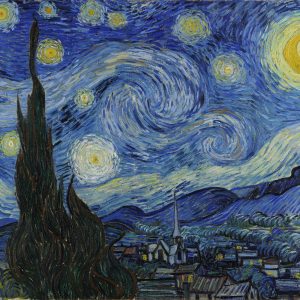
The Starry Night (La Nuit Étoillé)
$276.00 – $708.00Price range: $276.00 through $708.00 Seleccionar opciones Este producto tiene múltiples variantes. Las opciones se pueden elegir en la página de producto