
Phillips Collection; Washington D.C.
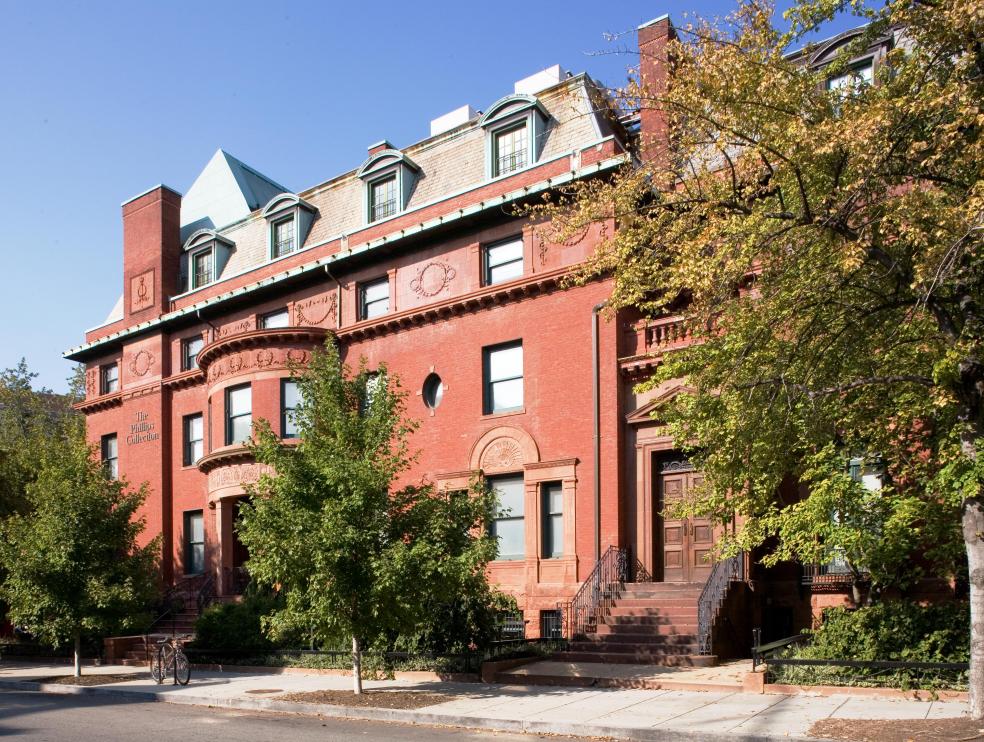
Opened in 1921 in Washington, DC’s historic Dupont Circle, The Phillips Collection holds the distinction of being America’s first museum of modern art. It was founded by collector and philanthropist Duncan Phillips as a living memorial following a period of profound family tragedy. Housed originally within the Phillips family home, the museum was conceived from the outset as an “intimate museum combined with an experiment station,” a place where Phillips could share the restorative power of art with the nation.
A Memorial Born from Tragedy
Duncan Phillips’s decision to found a museum was a direct response to devastating personal loss. In 1917, his father, Major Duncan Clinch Phillips, died suddenly from a heart condition, and just a year later, his beloved older brother, James, succumbed to the 1918 flu epidemic. “Sorrow all but overwhelmed me,” Phillips later wrote. “Then I turned to my love of painting for the will to live.” To cope with his grief, he and his mother founded the Phillips Memorial Art Gallery in late 1918. They opened it to the public in the fall of 1921, displaying their growing collection in a specially designed gallery added to their home.
An Intimate Museum, A Bold Vision
As a collector, Duncan Phillips was noted for his pioneering vision. He deviated from the standard museum practice of displaying works based on shared nationality, instead interpreting modernism as a dialogue between the art of the past and the present. He championed the work of his contemporaries at a time when non-academic art was not widely accepted. This philosophy of taking risks allowed Phillips to be the first to collect and exhibit artists who were not yet well known, including Milton Avery, Pierre Bonnard, Georges Braque, Jacob Lawrence, Grandma Moses, Georgia O’Keeffe, and Rufino Tamayo.
A Family Legacy of Leadership
The museum was a family endeavor for decades. In 1921, Duncan married the painter Marjorie Acker, who became his partner in developing the collection and served as Associate Director, offering him crucial insight into the artist’s process. Upon Duncan’s death in 1966, Marjorie became the museum’s director, a position she held for six years. She was succeeded in 1972 by their son, Laughlin (Loc) Phillips, who served as Director until 1992. Under Laughlin’s leadership, the museum was transformed from a personal creation into a professionalized institution with a formal collection database, a membership program, and a significantly expanded footprint.
Growth and Professionalization
Following the Phillips family’s direct leadership, the museum continued to evolve. Director Jay Gates (1998-2008) oversaw a major renovation that included the addition of the Sant Building and the 2006 establishment of the Center for the Study of Modern Art, fulfilling a long-held vision for a scholarly hub. Under Dorothy Kosinski (2008-2022), the institution focused on diversifying its collection, exhibitions, and staff, notably hiring a full-time Chief Diversity Officer and opening a satellite campus. The museum is currently led by Director Jonathan P. Binstock, who assumed the role in 2023.
The Evolution of the Campus
The Phillips Collection’s physical space has grown around its original 1897 Georgian Revival house. After the family moved out in 1930, the entire home was converted into a museum. The first major expansion was the Goh Annex, built in 1960 and enlarged in 1989 to include a conservation studio and more gallery space. The most significant transformation occurred between 2002 and 2006 with the addition of the Sant Building, which incorporated an adjacent historic apartment building. This project doubled the museum’s size, adding large, light-filled galleries for contemporary art, a new Rothko Room, an auditorium, and a library and archives, seamlessly integrating the new spaces with the historic structures.
Mostrando el único resultado
-
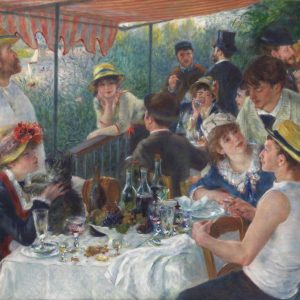
Luncheon of the Boating Party (Le Déjeuner des Canotiers)
$476.00 – $1,796.00Price range: $476.00 through $1,796.00 Seleccionar opciones Este producto tiene múltiples variantes. Las opciones se pueden elegir en la página de producto