
Napoleon Crossing the Alps
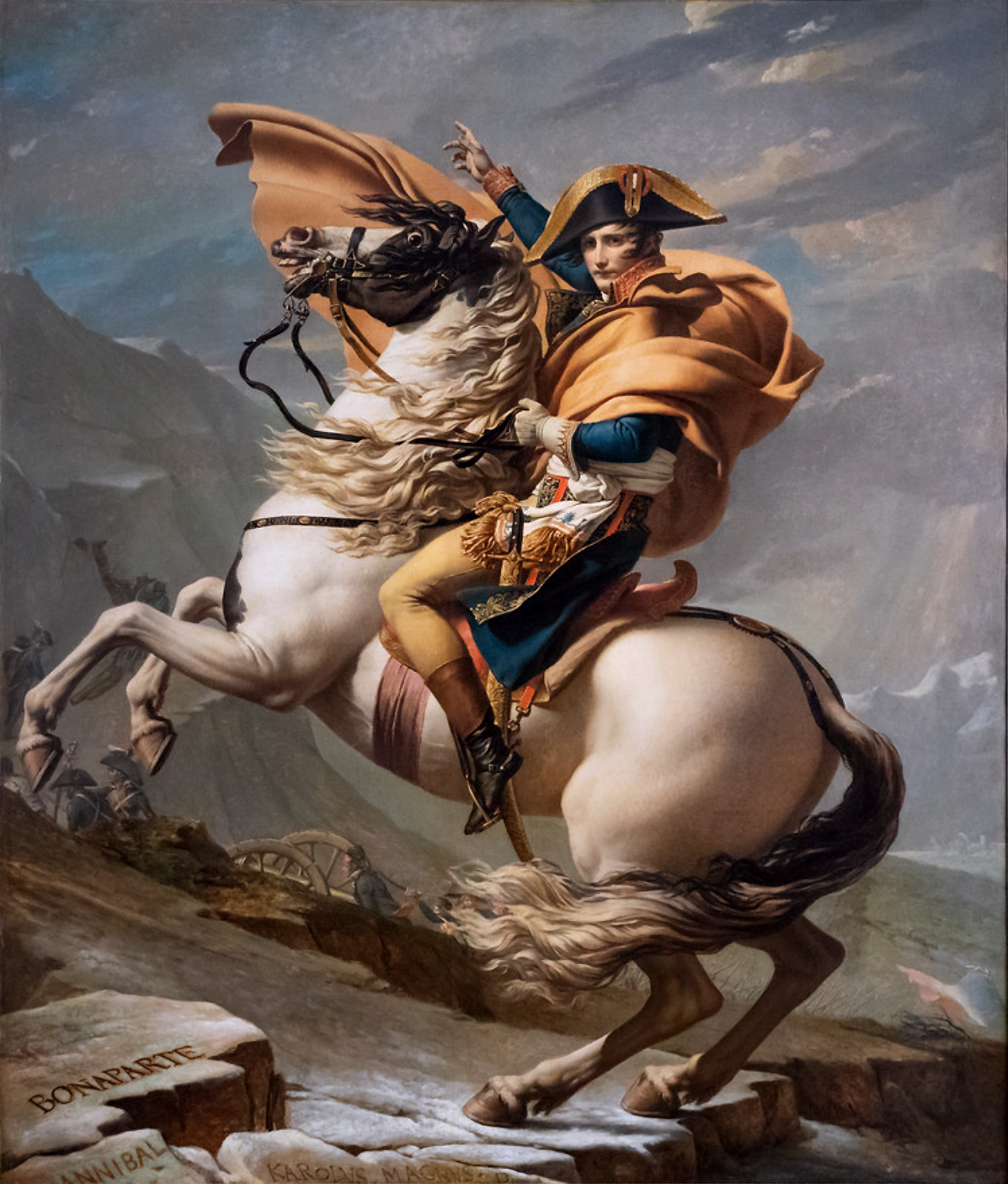
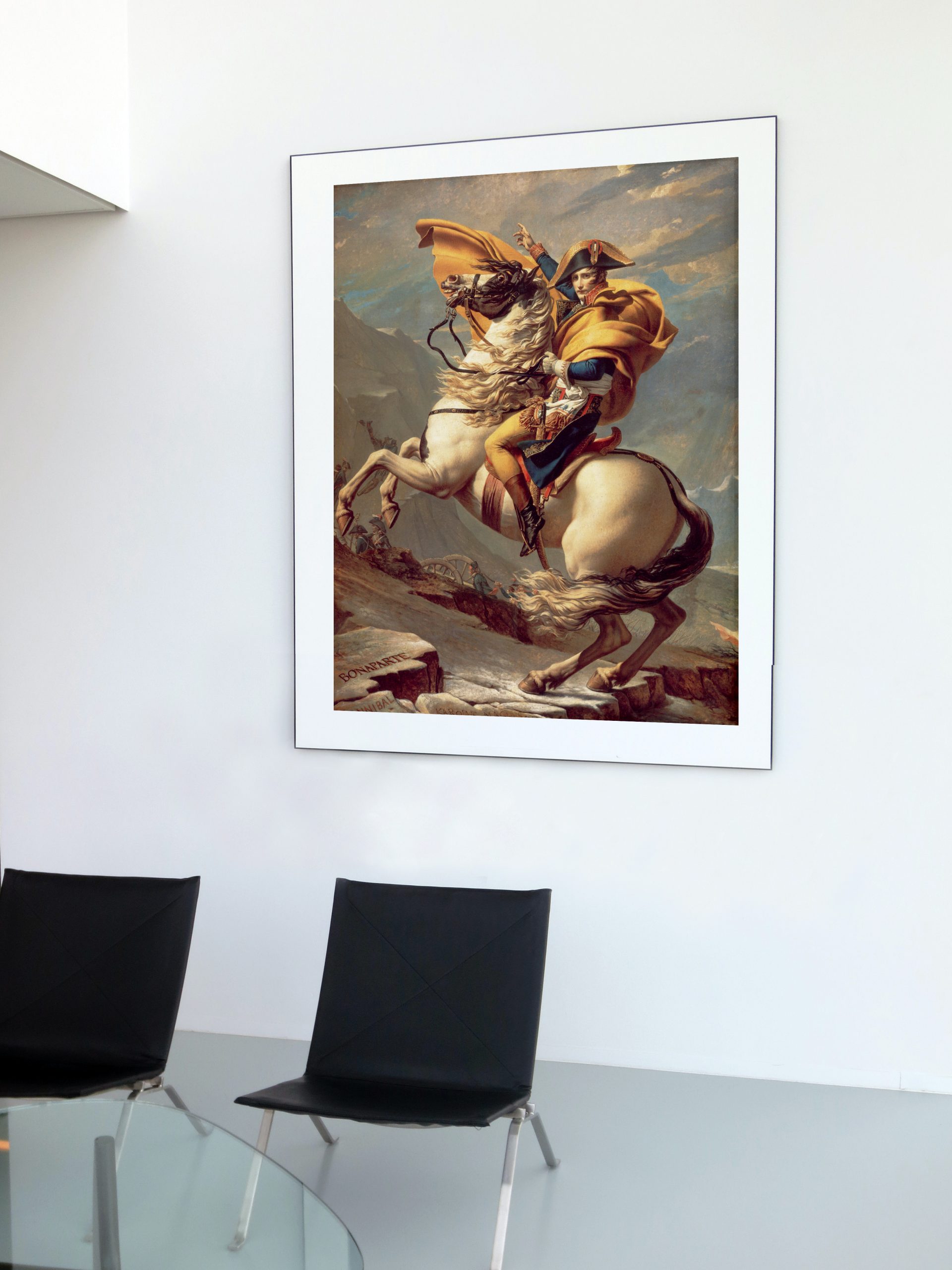
Jacques-Louis David’s Napoleon Crossing the Alps (261 x 221 cm), housed in Berlin’s Charlottenburg Palace, is a Neoclassical masterpiece celebrating Napoleon’s 1800 Alpine campaign. Despite mixed critiques—ranging from stiffness to propaganda—it remains one of the most powerful portrayals of Napoleon. David painted the work without Napoleon posing, using symbolic imagery to depict the leader’s calm dominance over chaos. The heroic figure on a rearing horse commands the rugged landscape, linking him to historic military greats. The painting captures both the spirit of its time and the rise of Napoleon’s legend.
Ratings / Reviews
Información adicional
| Dimensions | Original: 261 cm x 221 cm, Small: 104.4 cm x 88.4 cm, Medium: 156.6 cm x 132.6 cm, Large: 208.8 cm x 176.8 cm |
|---|
$740.00 – $4,612.00Price range: $740.00 through $4,612.00
Napoleon Crossing the Alps by Jacques-Louis David is a monumental oil painting completed between October 1800 and January 1801. Measuring an impressive 261 cm by 221 cm and housed in Berlin’s Charlottenburg Palace, this work marks a defining moment in Neoclassicism and French history. Though opinions on the painting vary—some find it stiff and lacking vitality, others dismiss it as mere propaganda, and a few see it as the beginning of David’s submission to Napoleon’s political power—it remains arguably the most iconic portrait of Napoleon Bonaparte ever created.
The painting commemorates Napoleon’s daring 1800 military campaign, during which he led his troops through the treacherous Alpine mountains to confront the Austrians, culminating in victory at the Battle of Marengo. Commissioned by King Carlos IV of Spain for the Royal Palace of Madrid, the portrait was intended to celebrate military leadership alongside other historic generals.
David faced notable challenges creating the piece, as Napoleon refused to sit for the portrait. Instead, the artist worked from earlier portraits and the actual uniform Napoleon wore at Marengo. To capture the figure’s youthful vigor, David even enlisted his son to pose on a ladder, dressed in the general’s uniform. Napoleon himself influenced the painting’s concept, insisting on the depiction of “calm on a fiery horse” to symbolize his composed mastery amid the chaos of war.
In the composition, Napoleon is astride a rearing Arabian stallion, towering over the dramatic Alpine landscape. His right hand points resolutely upward toward an unseen summit, seemingly urging the viewer and his distant troops forward. The scene is charged with dynamic diagonals—the cape, limbs, and mountainside converge in a tension balanced by swirling clouds. On a nearby rock, David etched the names of legendary leaders Hannibal and Charlemagne, aligning Napoleon with historic military greatness. Far from a mere landscape, the setting acts as an extension of Napoleon’s formidable will, visually suggesting that nature itself bends to his command.
Despite the historical inaccuracy—Napoleon crossed the Alps on a mule, not a horse—the painting prioritizes symbolic power over realism. David’s signature and the date are inscribed on the horse’s breastplate, reinforcing the artist’s claim over this heroic image.
This work exemplifies David’s “return to pure Greek art” ideals, portraying an archetypal hero for posterity. Though Napoleon’s later commissions showed a more restrained David, Napoleon Crossing the Alps retains a vibrant energy, capturing the legend’s essence and marking the beginning of a new political and artistic era.