
The Lady of Shalott
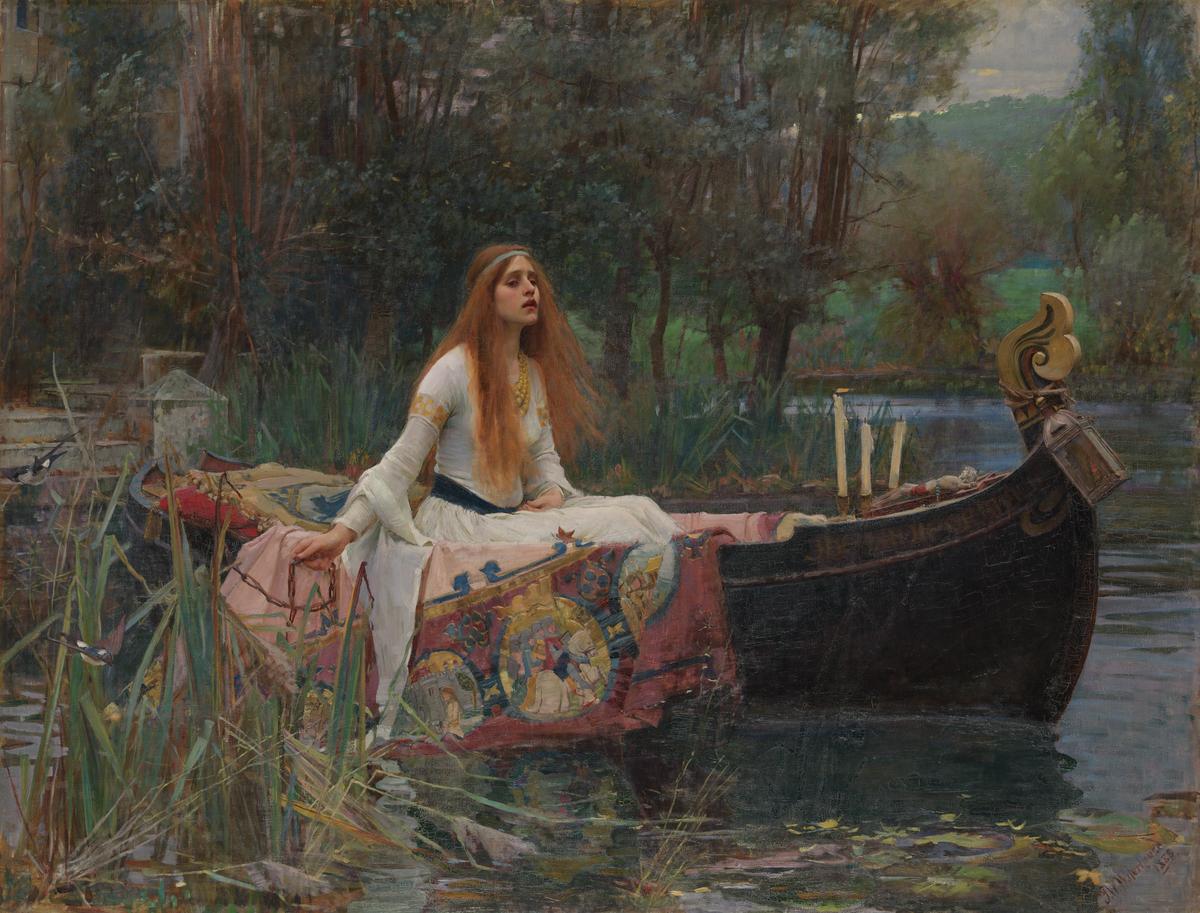

Measuring 153 × 200 cm, this 1888 Romantic masterpiece captures a key scene from Tennyson’s poem as the cursed Lady drifts toward Camelot in her final moments. With its naturalistic detail, emotional depth, and literary inspiration, it remains one of Waterhouse’s most iconic works. Housed at Tate Britain in London.
Ratings / Reviews
Información adicional
| Dimensions | Original: 153 cm x 200 cm, Small: 61.2 cm × 80 cm, Medium: 91.8 cm × 120 cm, Large: 122.4 cm × 160 cm |
|---|
$476.00 – $2,448.00Price range: $476.00 through $2,448.00
The Lady of Shalott by John William Waterhouse is a deeply evocative painting that brings to life the haunting final moments of Alfred, Lord Tennyson’s beloved 1832 poem of the same name. Completed in 1888 and measuring 153 × 200 cm, this Romantic masterpiece captures a tragic scene from Part IV of the poem, in which the Lady, doomed by a mysterious curse, sets out on her final journey down the river to Camelot. In this poignant moment, she releases the chain that tethers her small boat to the shore, her eyes fixed solemnly on a crucifix positioned before three flickering candles.
The narrative unfolds around a woman who has lived in isolation on the island of Shalott, cursed to view the world only through its reflection in a mirror. When she defies this constraint to look directly upon the knight Lancelot, the mirror shatters, and the curse takes hold. Her fate sealed, she leaves her tower, climbs into a boat, and drifts toward Camelot—singing her final song before death overtakes her.
Waterhouse’s portrayal of this scene is rich with symbolism and emotion. The Lady’s expression is distant, almost trance-like, as described in Tennyson’s lines—”Like some bold seer in a trance, / Seeing all his mischance.” The naturalistic landscape envelops the boat in quiet melancholy, painted during Waterhouse’s brief period of plein-air work. While the exact location is unknown, the artist often traveled to Somerset and Devon, likely drawing inspiration from these surroundings.
The model for the Lady is traditionally believed to have been Waterhouse’s wife. His deep connection to Tennyson’s poetry is evidenced by his copy of the poet’s collected works, which he filled with pencil sketches—many of them studies for this very painting and later interpretations of the poem. His sketchbook includes multiple preparatory drawings for this 1888 piece as well as for his 1894 version (held in Leeds City Art Gallery), which depicts the earlier moment when the Lady turns from the mirror to gaze upon Lancelot. He also envisioned later scenes in which the Lady’s boat reaches Camelot, extending his artistic engagement with the poem’s tragic arc.
The Lady of Shalott is not only a cornerstone of Waterhouse’s career but also a defining example of 19th-century Romanticism, infused with emotional intensity, literary inspiration, and a reverence for nature and the tragic beauty of myth. Today, this iconic painting resides at Tate Britain in London, where it continues to captivate viewers with its timeless story of longing, fate, and the cost of freedom.