
The Magic Circle
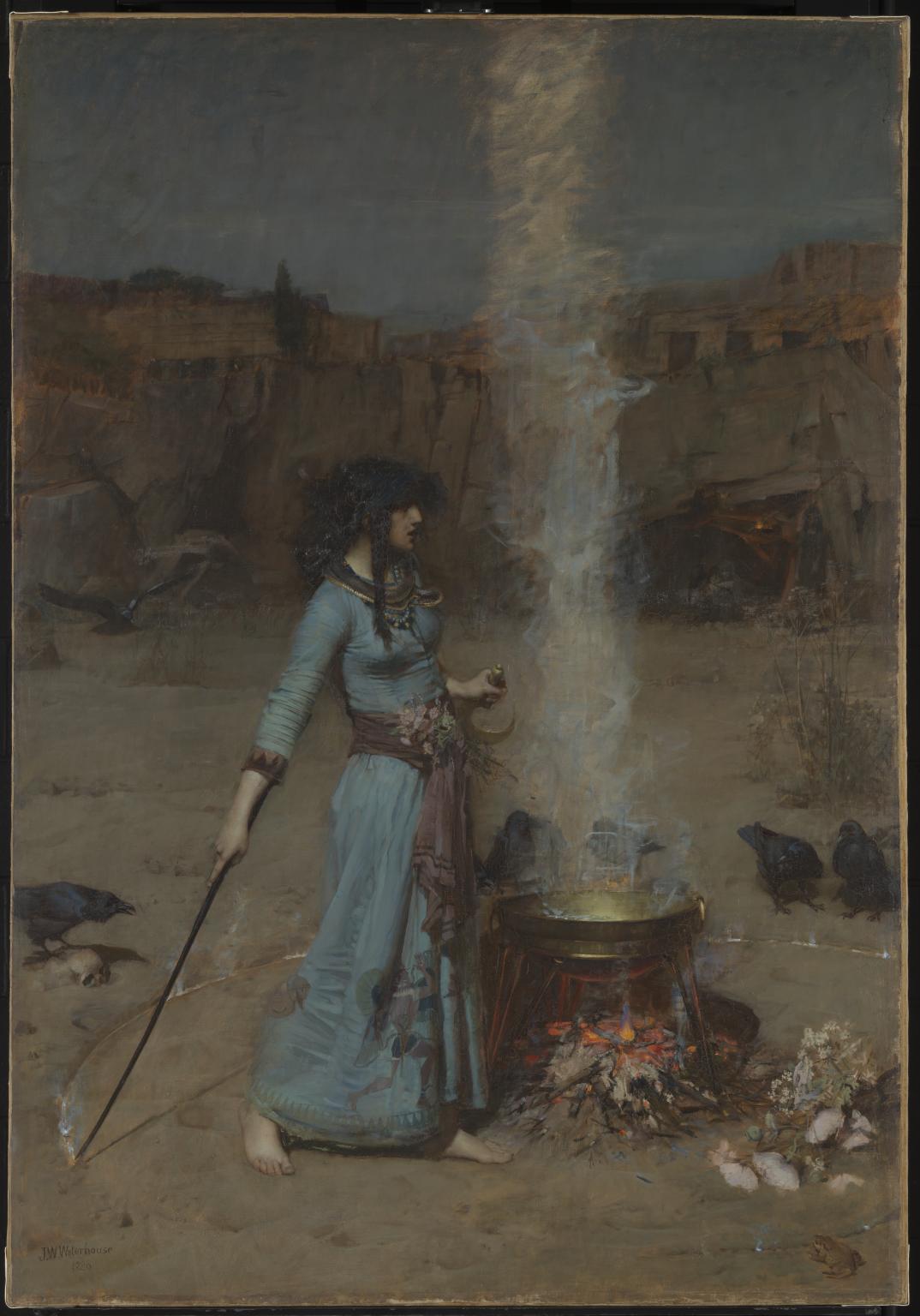

John William Waterhouse’s The Magic Circle (1886), oil on canvas, 183 × 127 cm, is an early work exploring themes of magic, prophecy, and feminine power. The painting depicts a solitary witch or priestess drawing a protective circle with a wand, holding a crescent-shaped sickle linking her to the moon goddess Hecate. Inside the circle, flowers and the woman symbolize life and beauty; outside, a barren landscape populated by ravens, rooks, and a frog symbolizes evil kept at bay. Drawing on diverse cultural motifs, the painting captivated Victorian audiences upon its Royal Academy exhibition. It is currently in the collection of Tate Britain, London.
Ratings / Reviews
Información adicional
| Dimensions | Original: 183 cm × 127 cm, Small: 73.2 cm × 50.8 cm, Medium: 109.8 cm × 76.2 cm, Large: 146.4 cm × 101.6 cm |
|---|
$396.00 – $1,860.00Price range: $396.00 through $1,860.00
John William Waterhouse’s The Magic Circle (1886), oil on canvas, 183 × 127 cm, housed at Tate Britain, London, is a striking example of Pre-Raphaelite art that explores themes of magic, mystery, and feminine power. The painting presents a solitary woman, depicted as a sorceress or priestess, engaged in a ritual act—drawing a protective magic circle around herself with a wand, while a fiery cauldron burns nearby.
The figure’s appearance combines diverse cultural references: her hairstyle evokes early Anglo-Saxon styles, while the richly decorated gown features motifs inspired by Persian or Greek warriors. This eclectic mix reflects Waterhouse’s fascination with the exotic and the mystical, characteristic of Victorian artistic interests. The crescent-shaped sickle in her left hand links her to Hecate, the moon goddess associated with magic and the night.
The magic circle is central to the composition, symbolizing a boundary between two realms. Inside the circle, life flourishes—represented by blooming flowers and the woman herself—while outside lies a barren landscape inhabited by creatures linked to witchcraft and superstition, such as rooks, ravens, and a frog. These dark symbols are excluded from the protective space, highlighting the woman’s control over the forces of evil and chaos.
Waterhouse’s work draws from contemporaries like J.F. Lewis and Lawrence Alma-Tadema, blending historical and mythical elements into a richly imagined scene. The muted tones of the background contrast with the vibrant figure, focusing attention on the sorceress and enhancing the painting’s mysterious atmosphere. Techniques influenced by Jules Bastien-Lepage, including spatial recession and textural contrasts, add depth and presence to the composition.
The painting’s meaning remains open to interpretation, inviting viewers to contemplate the nature of magic, the power of the feminine, and the tension between the known and the unknown. Its symbolism and ambiguity evoke the Victorian fascination with the supernatural and the exotic.
Exhibited at the Royal Academy in 1886, The Magic Circle was praised for its originality and pictorial strength. The critic for The Magazine of Art commended Waterhouse’s work as “original in conception and pictorial in his results,” a recognition of its compelling narrative and visual impact.
In essence, The Magic Circle is a masterful portrayal of enchantment and mystery. Its symbolic richness and dramatic composition secure its place as a key work within Waterhouse’s career and the broader Pre-Raphaelite tradition, continuing to engage audiences with its timeless exploration of magic and feminine power.