
The Dream
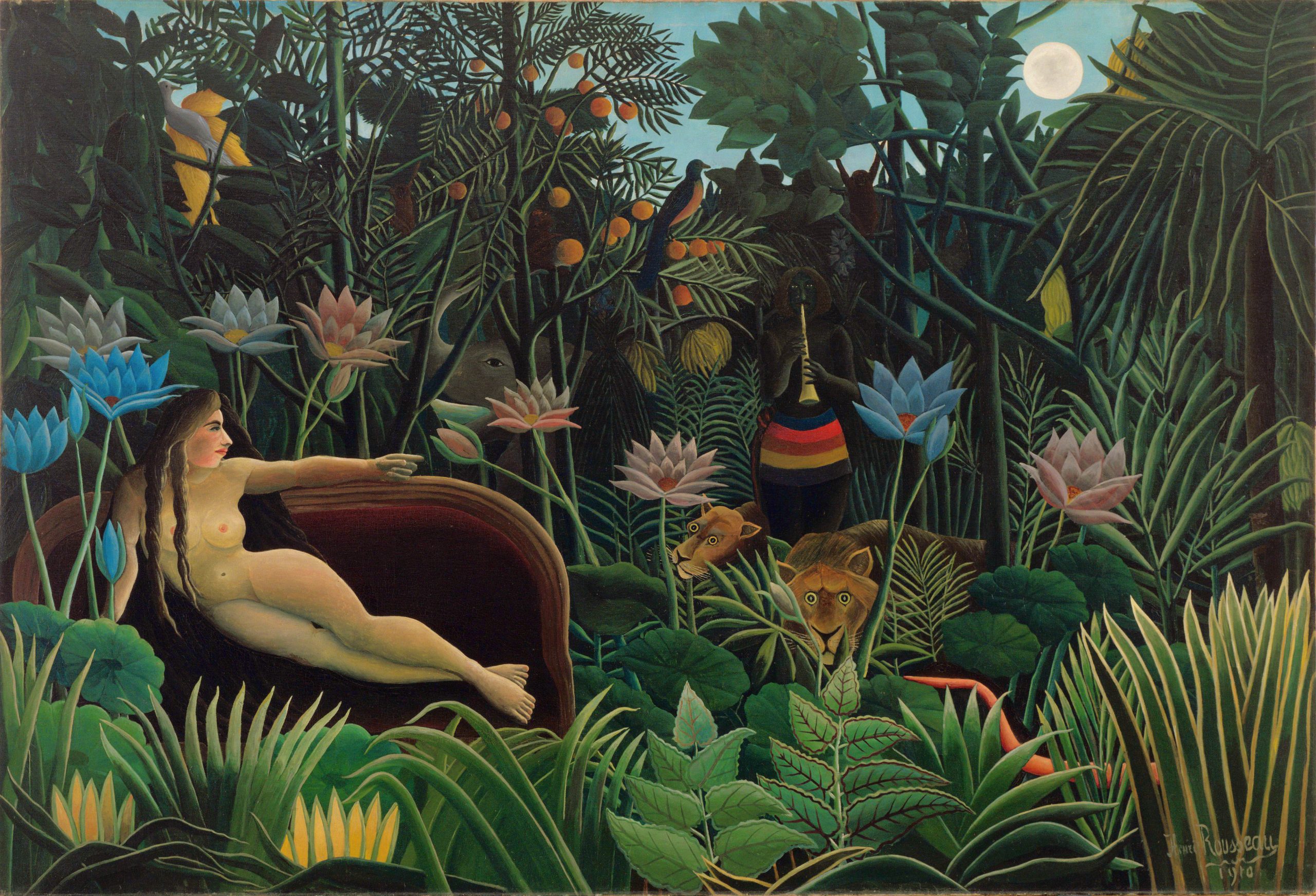
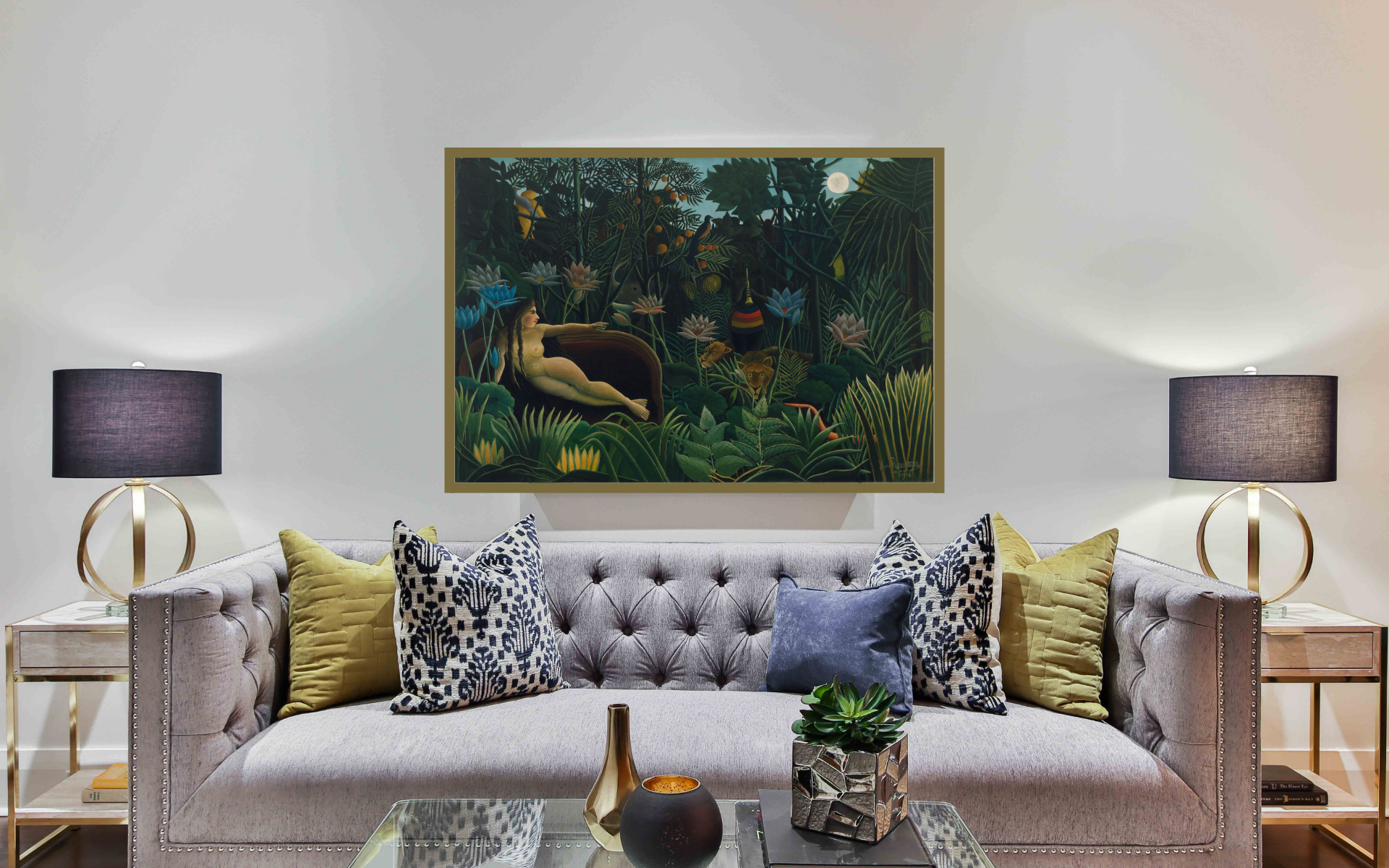
Henri Rousseau’s The Dream (1910), oil on canvas, 204.5 x 298.5 cm, at The Museum of Modern Art, New York, is the artist’s largest and most ambitious jungle painting. A nude woman reclines on a sofa improbably placed in a lush, moonlit jungle populated by exotic plants, animals, and a horn player. Though Rousseau never left France, his scenes were inspired by botanical gardens, illustrated books, and expositions in Paris. Painted in the distinctive Naïve style—precise outlines, rich colors, and imaginative composition—the work blends reality and fantasy, making it a touchstone for modern art and a precursor to Surrealism.
Ratings / Reviews
Additional information
| Dimensions | Original: 204.5 cm x 298.5 cm, Small: 81.8 cm × 119.4 cm, Medium: 122.7 cm × 179.1 cm, Large: 163.6 cm × 238.8 cm |
|---|
$780.00 – $4,880.00Price range: $780.00 through $4,880.00
Henri Rousseau’s The Dream (1910) is the largest and one of the most ambitious works of the self-taught artist, celebrated as a defining example of Naïve art. Executed in oil on canvas, it measures 204.5 x 298.5 cm and is held in the collection of The Museum of Modern Art, New York.
Rousseau, who had worked as a Paris customs inspector before retiring to paint full-time, never traveled outside France. His vivid jungle scenes were instead inspired by sources available in Paris: illustrated books, colonial expositions, dioramas, and regular visits to the Jardin des Plantes, which combined a zoo and botanical gardens. The exotic flora and fauna of The Dream are the product of careful observation of these resources, combined with the artist’s own imaginative invention.
The composition depicts a nude woman reclining on a sofa, a motif drawn from traditional European odalisque paintings. Here, however, the sofa is set incongruously within a moonlit jungle teeming with fantastical vegetation, wild animals, and a mysterious horn player. This juxtaposition of interior and exterior spaces, realism and fantasy, creates the work’s dreamlike atmosphere.
Rousseau himself explained the genesis of such compositions, remarking, “When I am in these hothouses and see the strange plants from exotic lands, it seems to me that I am entering a dream.” The jungle of The Dream can be read as a projection of the reclining figure’s imagination, or as a manifestation of the artist’s own inner vision.
Formally, The Dream exhibits Rousseau’s characteristic style: precise outlines, flat planes of color, and a deliberate rejection of academic perspective in favor of clarity and decorative rhythm. These qualities, once considered unsophisticated, were admired by avant-garde artists in Paris for their originality and sincerity.
First exhibited at the Salon des Indépendants in 1910, The Dream was met with fascination by contemporary artists and critics, admired for its bold invention and striking imagery. Today it is recognized as a landmark of early 20th-century modernism, its blend of personal vision and imaginative subject matter anticipating the dreamscapes of Surrealism.