
Sassoferrato
Summary
Giovanni Battista Salvi (1609–1685), known as Sassoferrato, was an Italian Baroque painter celebrated for his serene and meticulously executed devotional paintings, particularly of the Virgin Mary. His style, rooted in the classical clarity of Raphael and the idealized forms of Perugino, adapted Renaissance traditions to the devotional tastes of 17th-century Rome. Although he was active during the height of the Baroque, his work diverged from the dramatic dynamism of his contemporaries, favoring instead a refined, contemplative approach that appealed to private patrons and ecclesiastical clients. Sassoferrato’s paintings became enduring symbols of Catholic piety, widely collected both during his lifetime and long after his death.
Childhood and Education
Sassoferrato was born in 1609 in the small town of Sassoferrato in the Italian region of Le Marche. His father, Tarquinio Salvi, was a modest painter and restorer who had studied the Purist tradition. It was from his father that the young Giovanni first learned the basics of drawing and painting.
At an early age, Salvi moved to Rome to further his training. There he studied under Domenichino, one of the leading figures of Baroque Classicism. Under Domenichino’s guidance, Sassoferrato developed the precise draftsmanship, idealized forms, and harmonious compositions that would define his mature style. His early promise attracted commissions from religious orders and members of the clergy, who appreciated the suitability of his devotional images to the guidelines established by the Council of Trent.
Career in Rome
Sassoferrato settled permanently in Rome, marrying in 1648 and raising a large family. His gentle, decorative style quickly found favor among Rome’s upper classes. He established a workshop that specialized in producing highly finished devotional images—many based on repeated compositions. As a result, there are often multiple near-identical versions of his works, a testament both to demand and to the studio’s efficiency.
While he occasionally painted portraits and altarpieces, Sassoferrato concentrated primarily on devotional subjects, particularly the Madonna and Child, Christ, and selected saints. His imagery drew on established iconographies, yet he refined them through careful modeling, strong chiaroscuro, and luminous color. His admiration for Renaissance art is evident in his copies of Raphael’s Canigiani Holy Family, Madonna Conestabile, and Madonna of the Pinks.
Sassoferrato’s most characteristic type was a simplified reinterpretation of the Renaissance Madonna. These works combine the grace of Raphael and Perugino with the clarity of light and shadow influenced by Caravaggio. The figures are idealized, the compositions ordered, and the colors pleasingly balanced. While his treatment is rooted in Classicism, there is also a certain emotional intimacy that reflects the spiritual aims of Counter-Reformation art.
Artistic Style and Influences
Though contemporaneous with the dramatic theatricality of Roman Baroque masters like Pietro da Cortona and Gian Lorenzo Bernini, Sassoferrato aligned more closely with the restrained Classicism of his teacher Domenichino, as well as Guido Reni and Guercino. His works share affinities with those of Carlo Dolci, another painter known for devotional half-length figures.
Sassoferrato’s paintings are characterized by clarity of form, luminous color, and a highly polished surface. His Madonnas are often shown against dark backgrounds, which intensifies the purity of the figures and creates a meditative focus. This stylistic approach made his works highly suitable for private devotion, a purpose for which they were frequently commissioned.
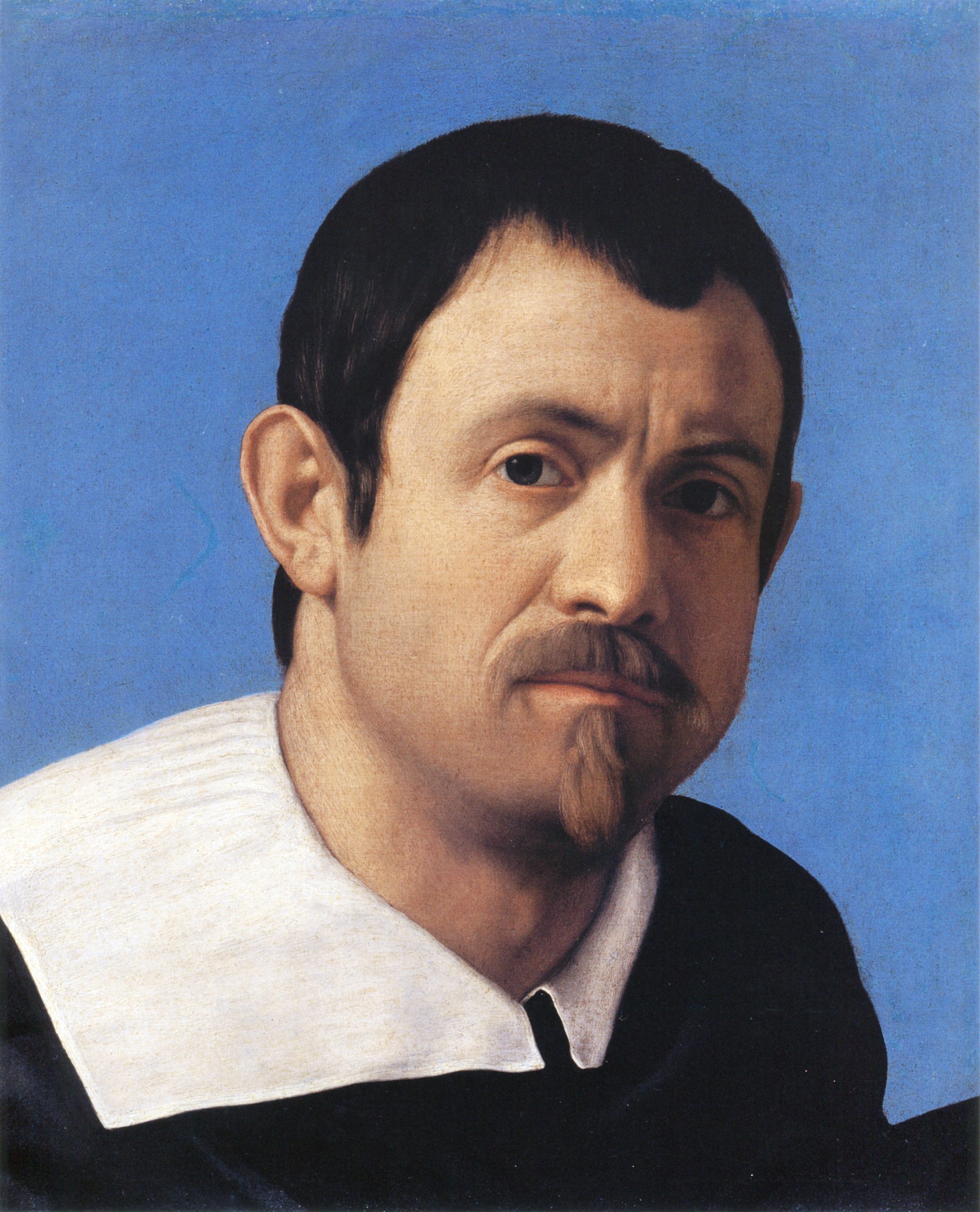
While his portraits are less well known than his Madonnas, they reveal a refined sense of color and precision of line. The sitters are often depicted with a certain formality and distance, reflecting both the artist’s temperament and the expectations of his patrons. His Self-Portrait, gifted by Cardinal Flavio Chigi to Cosimo III, Grand Duke of Tuscany, is evidence of the esteem in which he was held in aristocratic circles.
Later Career and Death
Sassoferrato’s reputation and success endured well into his later years. He maintained a steady clientele, particularly among members of the papal court and Roman religious orders. His workshop continued to produce devotional paintings in response to demand.
On August 8, 1685, Sassoferrato died in Rome at the age of seventy-six. His works remained popular after his death, continuing to circulate widely in religious and private collections.
Legacy
Giovanni Battista Salvi, called Sassoferrato, occupies a unique position in 17th-century Italian painting. His work cannot be dismissed as provincial or archaic; rather, it reflects a sophisticated and deliberate adaptation of Renaissance models to the devotional needs of his time. By focusing on devotional paintings in a style reminiscent of sacred icons, he responded to the spiritual tastes of the Bolognese-influenced Roman milieu.
Sassoferrato’s art is now recognized as a refined variant of the Classicist tendencies that persisted alongside the exuberance of the High Baroque. His serene Madonnas, in particular, have remained enduring symbols of Catholic devotion. Today, his paintings are preserved in major collections, including the National Gallery in London (Virgin in Prayer), the Wallace Collection in London (Mystic Marriage of Saint Catherine), the Uffizi Gallery in Florence (Self-Portrait), and the Museo del Prado in Madrid (Virgin in Meditation and Virgin with the Sleeping Christ Child).
Mostrando el único resultado
-

The Virgin Mary in Prayer
$396.00 – $796.00Price range: $396.00 through $796.00 Seleccionar opciones Este producto tiene múltiples variantes. Las opciones se pueden elegir en la página de producto