
The Virgin Mary in Prayer
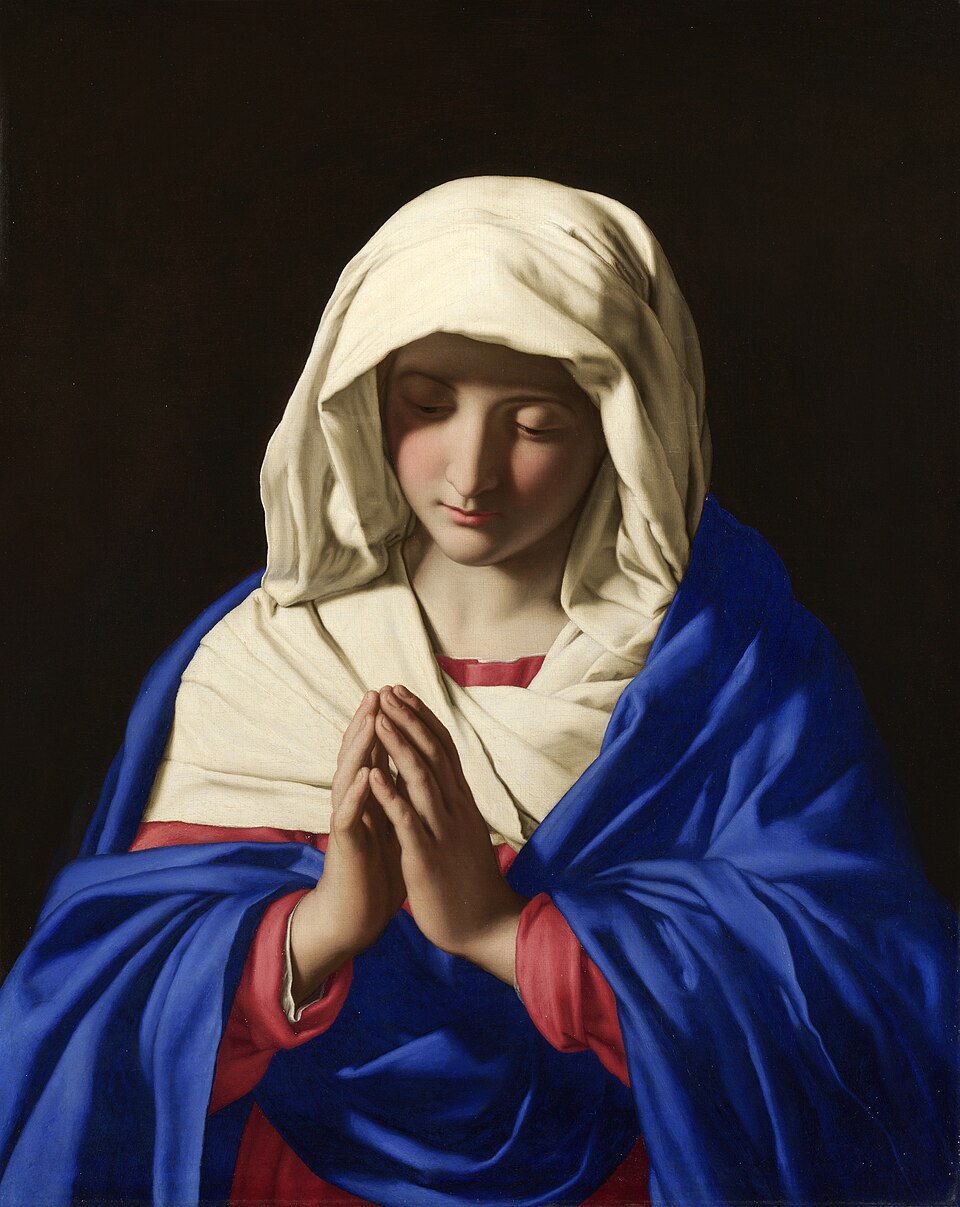
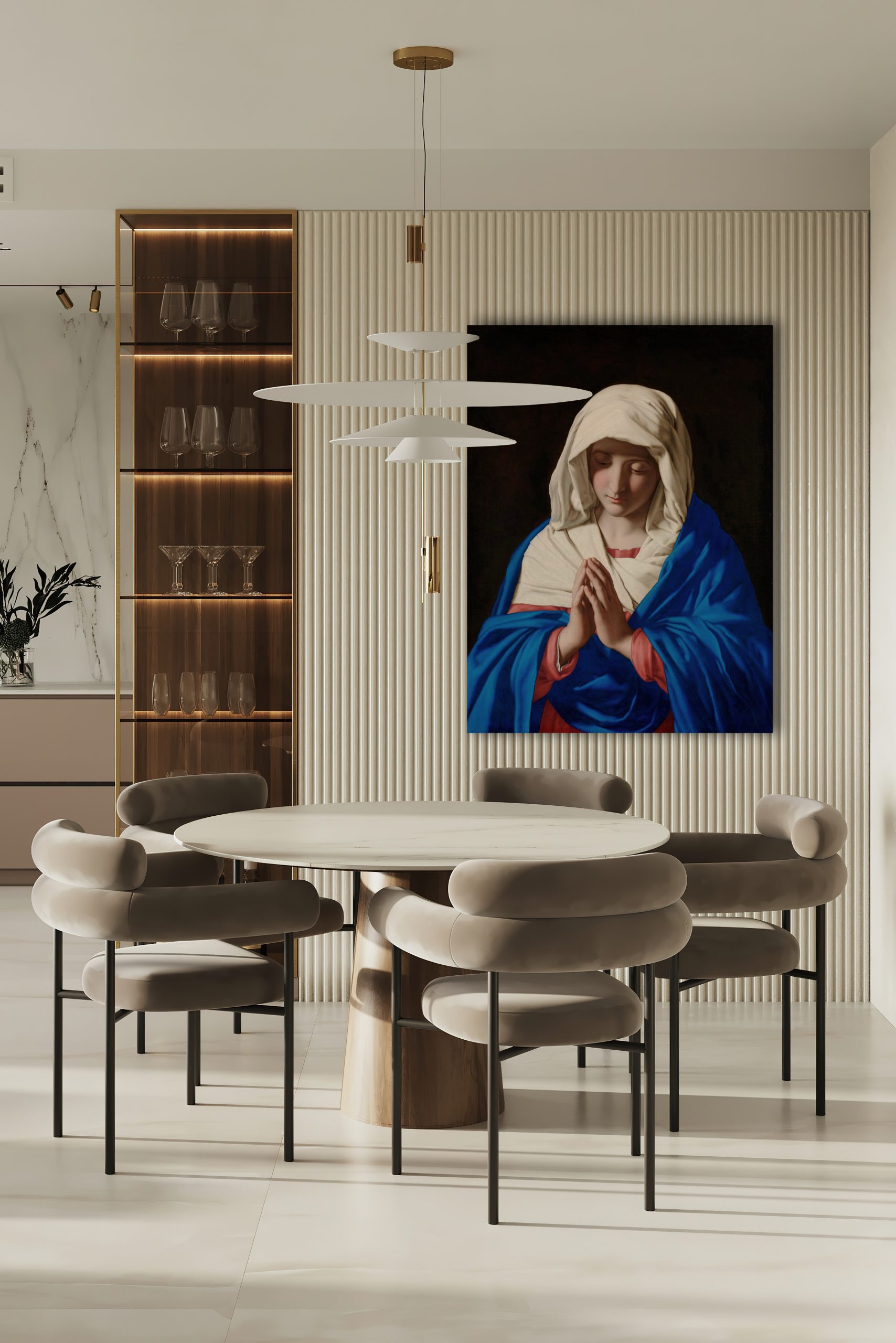
Sassoferrato’s The Virgin in Prayer (1640–1650), oil on canvas, 73 × 57.7 cm, in the National Gallery, London, is a hallmark of 17th-century devotional art. Depicting the Virgin in quiet prayer against a dark background, the composition uses a restrained palette of red, white, and ultramarine blue, the latter derived from costly lapis lazuli. The strong lighting and sculptural modeling focus attention on the Virgin’s serene expression and radiant presence. Produced during the Counter-Reformation for private devotion, the work reflects Sassoferrato’s synthesis of Raphael’s elegance with Baroque piety, exemplifying his mastery in creating intimate, contemplative images of the Virgin.
Ratings / Reviews
Información adicional
| Dimensions | Original: 73 cm × 57.7 cm, Small: 58.4 cm × 46.2 cm, Medium: 87.6 cm × 69.2 cm, Large: 102.2 cm × 80.8 cm |
|---|
$396.00 – $796.00Price range: $396.00 through $796.00
Giovanni Battista Salvi, better known as Sassoferrato, painted The Virgin in Prayer between 1640 and 1650. Executed in oil on canvas, the work measures 73 × 57.7 cm and is now part of the National Gallery, London. Though he also produced large-scale altarpieces, Sassoferrato became most celebrated for intimate devotional images of the Virgin, designed for private contemplation and widely collected during the 17th century.
The composition isolates the Virgin Mary against a plain, dark background, creating an atmosphere of concentrated devotion. Her head is inclined in prayer, framed by a white headdress that emphasizes the porcelain-like smoothness of her skin. The absence of narrative or symbolic objects directs the viewer’s attention entirely toward her serene figure.
The color scheme is restrained but highly effective: the luminous white of the headdress, the warm red of the garment beneath, and the deep blue of the robe. Sassoferrato employs ultramarine—an exceptionally costly pigment derived from lapis lazuli mined in northeastern Afghanistan. In the 17th century, ultramarine was prized for its purity and intensity, often reserved for depictions of the Virgin as a sign of honor. The brilliance of the blue, set against the impenetrable darkness of the background, creates a striking visual contrast and reinforces the painting’s devotional impact.
Lighting plays a crucial role in the composition. Strong illumination falls across the Virgin’s face and hands, giving them a sculptural clarity that heightens the sense of physical presence. The modeling of her features is smooth and idealized, in keeping with a tradition of presenting the Virgin as a vision of perfection rather than as a portrait of an earthly figure.
The subject of the Virgin in prayer emerged in the 15th century and grew in popularity during the Counter-Reformation, when reformers in the Roman Catholic Church emphasized personal devotion and meditation. Sassoferrato produced multiple versions of this subject, varying the angle of the head, arrangement of hands, and direction of the gaze to create distinct compositions suited to individual patrons. These works were intended to inspire private, contemplative engagement with the image of the Virgin.
Sassoferrato’s style reflects his early training in the Marches and later work in Rome. His figures reveal the influence of Guido Reni in their refinement and clarity, while the harmonious colors and sculptural forms recall the legacy of Raphael and Perugino.
Acquired by the National Gallery in the mid-19th century, The Virgin in Prayer exemplifies Sassoferrato’s synthesis of Renaissance elegance with Baroque devotional sensibility. Its enduring appeal lies in its combination of technical precision, rich materials, and the timeless serenity of its subject.